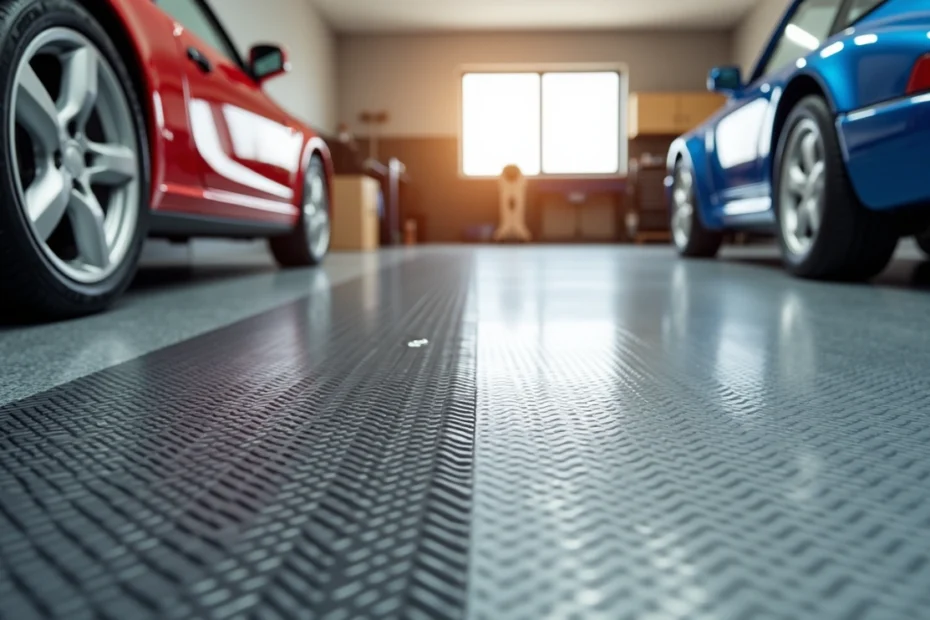
Need creative ideas for your garage floors? You’re not alone. I started looking at options for my garage renovation and quickly found that epoxy coatings—while popular—are just one of many solutions you can get today.
The trend toward multifunctional home spaces has made garage flooring options more accessible than ever. Concrete paint costs just $0.15 per square foot, and interlocking tiles can withstand loads up to 40,000 pounds. You can now get economical garage flooring that combines both function and style. A concrete sealer might be your answer at approximately $50 for a one-car garage. If you want a premium alternative to epoxy garage floor, polyaspartic coatings could work for your needs and budget.
In this piece, you’ll learn about ten smart flooring solutions that are easy on your wallet. You’ll get the pros and cons of each option, installation tips, and cost details that will help you pick the best choice for your space. These options include DIY-friendly solutions and those that can hide existing floor damage. Your garage floor can look amazing without the premium price tag that usually comes with high-end finishes.
Interlocking Garage Tiles
Interlocking garage tiles stand out as one of the most practical garage flooring options you can find today. These modular pieces connect like puzzle pieces and create a durable surface that revolutionizes your space without needing professional help.
Easy DIY installation
Interlocking tiles solve installation worries that might have kept you from upgrading your garage floor. You won’t need to deal with messy epoxy applications or toxic chemicals. Most systems come with a simple snap-together design that lets you finish installation within hours. The steps are simple: clean your floor, snap tiles together from one corner outward, and trim edges when needed. Many homeowners have transformed their garage in less than a day—some even completed 95% of the job in just 30 minutes!
A rubber mallet and a utility knife for edge cutting are all you need. Complex cuts around obstacles work perfectly with a jigsaw or circular saw. The tiles fit directly over existing concrete, even with slight imperfections.
Durable and customizable
These tiles are built differently from regular floor tiles. They’re engineered to handle extreme conditions. Many can support vehicle rolling loads exceeding 40,000 pounds, and premium options handle up to 80,000 pounds. On top of that, they resist chemicals, petroleum products, and moisture—vital qualities for a working garage environment.
You’ll find plenty of customization options. The tiles come in various colors, patterns, and textures that let you create unique designs from classic checkerboard patterns to custom logos. They match epoxy garage floor treatments in price while offering more flexibility, with simple options starting under $3 per square foot.
Great for hiding cracks
The most compelling reason to think about interlocking tiles is knowing how to hide floor imperfections. The tiles create a new surface that covers cracks, stains, and minor unevenness without grinding or repairs, unlike epoxy coatings that need extensive surface preparation.
This feature alone saves hundreds in preparation costs for garages with damaged concrete. The tiles insulate you from cold concrete, which makes the space perfect for workshops or home gyms. When a tile gets damaged, you can replace that single piece without redoing the entire floor.
Roll-Out Vinyl and Mats
Roll-out vinyl mats give busy homeowners quick results with an instant garage floor makeover. These heavy-duty coverings are a great alternative to epoxy garage floor finishes that don’t need much prep work or curing time.
Quick to install and remove
Roll-out vinyl mats are, without doubt, the easiest garage flooring to set up. You just need to unroll the material over your concrete, trim it if needed, and you’re done. The whole setup takes minutes instead of the hours or days other flooring systems need. These mats don’t need adhesive for indoor home use, which makes them perfect for renters who want flexibility.
Most homeowners choose what manufacturers call a “floating mat” setup – they just roll out the material and park their car on top to hold it in place. Taking it out later is just as easy.
Waterproof and low maintenance
Quality roll-out mats made from 100% solid polyvinyl give smooth, waterproof protection to your concrete. These surfaces guard your floor against common garage problems like oil, battery acid, road salt, and daily wear.
Cleanup is a breeze – spills just wipe away instead of soaking into the concrete. The non-porous surface keeps stains from setting in, so your concrete lasts longer. Many options come with slip-resistant textures that make wet conditions safer.
Best for temporary use
These mats have great features, but work best in certain situations. Unlike permanent options, they might move a bit during heavy use if you don’t secure them well. Sharp objects can also gouge or cut the material.
Roll-out mats really shine as parking pads, temporary workshop floors, or seasonal solutions you can remove when needed. You can pick from different colors and textures (ribbed, diamond, levant, coin) to match your style without committing to a permanent change.
Homeowners looking for budget-friendly garage flooring that looks good and works well will find that roll-out vinyl mats are one of the most accessible options today.
Paint, Stains, and Sealers
Surface treatments like paint, stains, and sealers are great options to boost your concrete garage flooring. These traditional approaches give you a straightforward way to improve your concrete without dealing with complex overlay systems.
Concrete paint: budget-friendly but short-lived
Concrete paint emerges as the cheapest garage floor solution you can find. It costs only $0.15 per square foot – about $40 total for a standard one-car garage. The original results look impressive, and you get many color options. Proper surface preparation is vital since dirt or moisture will prevent adhesion, though application needs minimal skill. This affordability brings substantial drawbacks. Hot tire pickup leads to peeling within months, and you’ll need complete reapplication every 1-2 years. Concrete paint works better in workshops or hobby spaces than in active garages.
Concrete stain: decorative and long-lasting
Concrete stain creates unique, marbled effects through chemical reactions with your concrete’s minerals. The color becomes part of the concrete itself since the stain penetrates the surface instead of coating it. This treatment runs about $10-15 per square foot, making it more expensive than paint but nowhere near as prone to damage. Acid-based stains create rich, variegated tones while water-based alternatives deliver more consistent coloring. The finish needs sealing afterward, which adds to both cost and maintenance needs.
Sealers: basic protection with minimal cost
Acrylic and latex sealers give you simple moisture protection at just $0.20 per square foot (about $50 for a one-car garage). They create a thin protective barrier that helps repel water while keeping your concrete’s natural look. Higher-end urethane sealers cost $1.40-1.60 per square foot and resist chemicals and UV damage better. Sealers work best as standalone protection for low-traffic garages or as topcoats over stains and paints to extend their life.
Premium Alternatives to Epoxy
A world of premium garage floor ideas exists beyond standard epoxy that delivers superior performance. These alternatives give you better longevity and unique benefits that traditional epoxy cannot match.
Polyaspartic coatings: fast-curing and UV-resistant
Polyaspartic coatings beat epoxy in many important ways. These advanced polymer-based systems need just hours to cure instead of days—you can walk on them after 8-12 hours. The sun won’t make them yellow or fade because they resist UV exposure naturally. Their chemical makeup creates excellent protection against abrasion. You’ll also get unlimited “pot life” during installation.
Rubber flooring: soft, durable, and easy to clean
Your garage’s rubber flooring stays comfortable underfoot while supporting heavy equipment. Virgin or vulcanized rubber choices deliver top-notch durability. These materials work great for home gyms or workshops where you need to reduce noise. The surface fights off moisture, stains, and mold, and gives you an excellent grip to prevent slips.
Carpet tiles: ideal for gyms or hobby spaces
Carpet tiles help turn your garage into a comfortable workout area. These stain-resistant options reduce sound well and cushion your exercises. Solution-dyed polypropylene versions with special backing won’t damage garage floors but are easy to clean.
Porcelain tiles: upscale look with high durability
Porcelain tiles show remarkable strength—2-3 times stronger than granite and 7-8 times stronger than marble. Oil, chemicals, and stains can’t penetrate their non-porous surface. You should think about these tiles if you want a showroom-quality finish that handles extreme garage conditions without losing color or fading.
Conclusion
Your garage floor can look amazing without spending a fortune or limiting yourself to epoxy. In this piece, we’ve looked at many options that give you the right mix of cost, function, and looks. The best choice really comes down to your needs, budget, and how you plan to use your garage.
Interlocking tiles are maybe even the most versatile choice. They’re easy to install yourself and do a great job of hiding floor damage. Roll-out mats give you quick results when you want a solution right away without long-term commitment. Paint and sealers are still the most economical choices, though you’ll need to maintain them more often.
If you’re ready to spend a bit more, premium options like polyaspartic coatings work better and cure faster than standard epoxy. You could also pick specialized surfaces like rubber flooring or carpet tiles to turn your garage into a gym or hobby area.
Looking at all these choices, you might find that mixing different options works best. You could use interlocking tiles where there’s heavy traffic and apply sealers in other areas. Today’s market gives you this flexibility with plenty of options to choose from.
Note that your garage needs the same attention as other rooms in your house. With prices starting at $0.15 per square foot for simple paint and premium options under $10 per square foot, you’ll find something that matches your vision and budget. The right garage floor gives you durability, good looks, and value – and it doesn’t have to be epoxy.