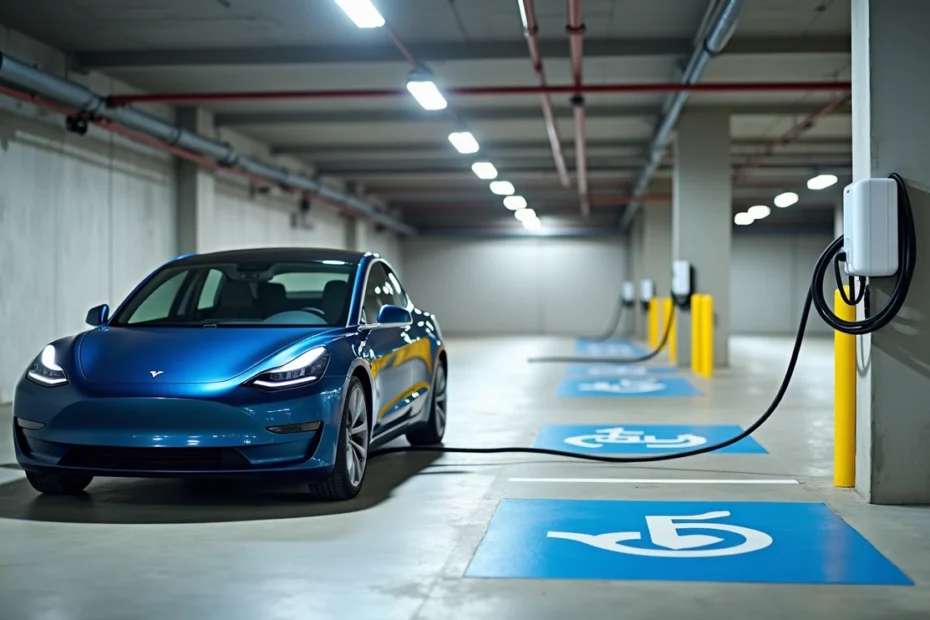
The perfect EV parking space design might look simple, but missing key details can make corrections get pricey later. Statistics show that 80%–90% of EV owners charge their vehicles at home. This makes a proper setup vital from day one.
Your EV charger design needs the right parking space dimensions to work well and meet regulations. Professional installers charge between $750 and $1750, plus permit fees. Any mistakes could mean paying twice. On top of that, you need to think over specific rules. The ADA states that spaces with mobility features must be at least 132 inches (11 feet) wide and 240 inches (20 feet) long. Many property owners have learned this lesson after rushing through planning and facing expensive changes.
In this piece, we’ll show you how to dodge common and expensive mistakes that plague EV parking space design. This knowledge will save your time, money, and help you avoid future headaches.
Understanding EV Parking Space Design Basics
What is an EV parking space?
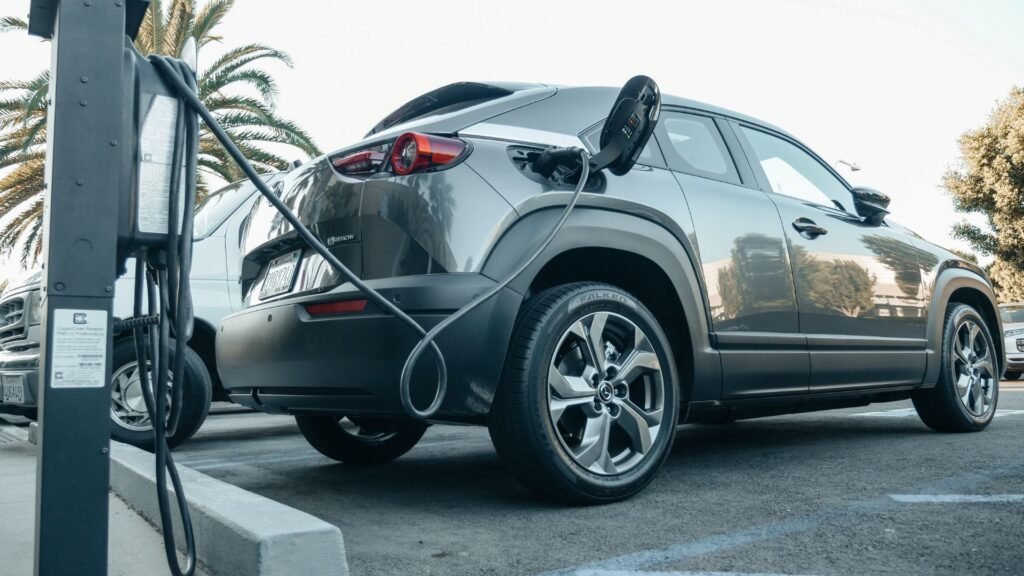
EV parking spaces are more than just regular parking spots. They come with special equipment for charging electric vehicles. Official definitions describe it as “a parking space that has been designated for the charging of electric vehicles”. These spaces have special markings and signs that help drivers find available charging stations.
Regular parking spots differ from EV spaces. Drivers need room to get out, reach the charger, and plug in their vehicles. These spaces need extra features that you won’t find in standard parking spots.
Standard EV parking space size and layout
Building codes set the dimensions for EV parking spaces, with slight variations between different areas. Most guidelines state that “the minimum length of each EV space shall be 18 feet (5486 mm) and the minimum width shall be 9 feet (2743 mm)”. Home installations work best with spaces 9-10 feet wide and 18-20 feet long. This gives drivers enough room to move around comfortably.
Public and commercial spaces need extra clearance. A well-laid-out garage uses 320-350 square feet per car. Spaces meant for people with mobility needs should be at least 11 feet wide and 20 feet long. They also need a 5-foot access aisle next to them.
Why design matters before installation
Good EV parking space design serves three key purposes: accessibility, safety, and future growth. Smart site planning creates a user-friendly charging experience that focuses on “accessibility and ease of use, visibility, and safety for installers, users, and the public”.
Bad design can cause problems. Drivers might struggle to maneuver their cars because charging ports are in different spots on various vehicles. Limited space can make cable handling difficult and increase damage risks.
Charging stations must work for everyone, regardless of their abilities or vehicle type. Planning helps avoid pricey updates as more people switch to EVs. A well-designed EV space makes charging easy and encourages more people to use electric vehicles.
Top Mistakes to Avoid in EV Parking Space Design
Building functional EV charging spaces needs proper planning. Let’s get into common pitfalls that can get pricey to fix.
1. Ignoring local EV charging parking space requirements
Local rules about EV spaces vary by location. To cite an instance, Virginia’s parking spaces must show signage with “PENALTY, UP TO $25.00” text to enforce proper usage. As with California’s CALGreen building code, 10% of spaces in new multi-family dwellings must be EV capable. You’ll face big fines if you don’t follow these rules.
2. Poor placement of EV chargers relative to vehicle ports
Each car model has its charging port in a different spot. Bad charger placement makes users stretch cables awkwardly or move their cars around. The quickest way to avoid cable issues is to put the charger on your car’s charging port. A charger in the middle works best if you have two cars.
3. Underestimating power supply and wiring needs
EV charging needs serious electrical power. Level 2 charging requires a 208-240V circuit with 12-80 amps, while DC Fast Charging needs 400-1000V. Most homes need a dedicated circuit pulling 32-80 amps. Wrong power estimates can create dangerous electrical problems.
4. Not planning for future expansion
Random upgrades can use up all your electrical capacity. Yes, it is tough to add more EV charging later – you might need a new utility connection or scrap your original setup. Smart planning with right-sized conduits and extra electrical closet space saves you from expensive rebuilds.
5. Skipping professional site assessment
Professional assessment gives you the full picture of your best charging options. They check your power capacity, find good spots, and make sure everything meets code. Skipping this step often means poor designs and fixes that cost more later.
6. Overlooking cable management
Good cable management keeps everyone safe and protects your equipment. Charging cables run 13-33 feet long and create trip hazards if left lying around. Retractable systems keep cables off the ground and help them last their full 10-20 year life.
7. Choosing the wrong charger type
The wrong charging equipment wastes money and time. Level 1 chargers (120V) take 40-50+ hours to reach 80% charge on a battery electric vehicle. Level 2 (240V) does this in 4-10 hours. Think about your charging speed needs first and pick equipment that matches.
8. Failing to consider user behavior and flow
User convenience affects how much people use charging stations. Research shows stations near amenities get used more, while complex payment systems drive users away. Understanding charging habits and patterns helps create better designs that users love.
Design Considerations for a Functional EV Charging Setup
Charger mounting height and accessibility
Safety and convenience depend on the right mounting height for EV chargers. You should install indoor chargers at least 18 inches above the floor. Outdoor installations need a minimum height of 24 inches above ground level. The best user experience comes from mounting heights between 750mm and 1200mm off the ground. These measurements help reduce electrical hazards and make cable connections easier.
ADA compliance requires enough space to move around. You’ll need a minimum 3-foot by 3-foot area in front of the equipment. Wheelchair users require extra space to direct themselves around the charging station.
Cable length and reach
Most EV charging cables stretch between 18 to 25 feet. Without a cable management system, cables can’t exceed 25 feet. While longer cables give you more flexibility, they become harder to handle.
A good cable management system protects against tripping hazards and shields cables from snow, ice, and vehicle damage. Some systems blend suspension and retraction features to keep cables elevated. Your charger should sit close to your vehicle’s charging port to avoid cable strain.
Wi-Fi and network connectivity
Smart charging features and remote monitoring rely on network connectivity. Wi-Fi works great in controlled settings but struggles in underground garages or remote spots due to signal problems.
Commercial installations benefit from cellular connectivity’s reliable coverage. Large charging sites that need 99% uptime should use routers with multiple SIM card slots as backup. Parking structures might need signal repeaters or amplifiers where transmission gets tough.
Lighting and weather protection
Safety and usability depend on proper lighting. You need a minimum luminance of 0.2 foot-candles. Outdoor installations require fixtures with good Ingress Protection (IP) ratings—at least IP65 to resist dust and moisture. Areas with flooding or heavy rain might need stronger IP68-rated components.
LEDs with 5000 Kelvin color temperatures create daylight-like illumination that’s easier on your eyes during night charging. Equipment with built-in lighting helps you see connection points better.
Dual charger setup for multi-vehicle garages
Multi-vehicle homes can benefit from dual charging solutions. The charger location should let both vehicles reach the cables easily. Modern dual charging stations can split power evenly between two connected vehicles.
Smart systems shift full power to the remaining vehicle once one finishes charging. This setup saves money on installation costs since you’ll only need one circuit instead of two separate charging stations.
Cost Implications of Poor Planning

Poor planning for EV parking spaces can hit your wallet hard. What might look like small oversights now can lead to major expenses later.
Hidden costs of redesign and reinstallation
Modernizing existing structures for EV charging costs three to five times more than installing during original construction. Panel upgrades can set you back USD 1000.00 to USD 3000.00. We had to break through finished surfaces to complete these upgrades. Underground trenching adds USD 8.00-USD 15.00 per linear foot. Small miscalculations can get pricey fast.
Permit and code violation penalties
Permit costs range from USD 50.00 to USD 800.00, with an average of USD 310.00. Skipping this vital step voids insurance policies and creates problems during property resale. Civil penalties in some areas reach USD 500.00 for violations of EV charging regulations. You might also face liability for actual damages.
Effect on property value and usability
Properties with well-designed EV chargers sell faster and often command better prices. Bad installations reduce property appeal. Adding charging stations boosts annual traffic by 0.3% and peak-month traffic by 0.5%. Smart site planning must account for these numbers. Location and demographics determine the economic benefits.
Conclusion
Smart EV parking space design demands meticulous planning and attention to detail. This piece outlines common mistakes that can lead to expensive fixes down the line. Your EV space design should be a key investment, not an afterthought.
A solid grasp of local rules, electrical capacity limits, and future growth needs should come before any construction begins. Skipping these steps could force you to update later at triple or quintuple the original cost.
Proper cable management, mounting heights, and smart charger placement will substantially affect both safety and user experience. These seemingly small details separate a smooth-running charging station from a problematic one.
Money matters here carry real weight. Permit issues, redesign work, and new installation costs can pile up to thousands of dollars. Smart EV space designs boost your property’s value while supporting the EV movement.
Expert assessment before installation serves as your shield against expensive mistakes. Professional guidance helps direct you through complex electrical needs, keeps you code-compliant, and creates solutions that fit your specific situation.
EV parking space design may look simple at first, but excellence lives in the details. Time spent on proper planning now will without doubt, save you money, time, and headaches later. Your careful approach today builds the foundation for safe, convenient charging tomorrow.